
When you’re serious about sewing, the right machine isn’t just a tool—it’s your teammate. And if you love working with knits, activewear, kids’ clothes, or everyday garments, a coverstitch serger combo machine can completely change the way you sew. Instead of juggling one machine for finishing seams and another for hemming, a good combo unit lets you do both: clean overlocked seams and professional, stretchy hems that look straight off the rack.
The problem? Not every “serger” includes coverstitch. Some are serger-only, some are coverstitch-only, and only a handful are true combo machines. Add in different thread counts, learning curves, prices, and features—and choosing the right one can feel overwhelming.
That’s exactly why we put together this guide on the Best Coverstitch Serger Combo Machines: Top Picks for Serious Sewists. In this post, we’ll walk through the standout models, what each one does best, who they’re ideal for, and how to decide between a combo machine and separate serger + coverstitch setup. Whether you’re upgrading from your first basic serger or building a more professional sewing space, this guide will help you invest in a machine that matches your skills, your projects, and your long-term sewing goals.
🧵 Our Top Picks 7 Coverstitch & Serger Machines — Comparison Table
| Machine | Price Range | ⭐ Best For | Key Features | Amazon |
|---|---|---|---|---|
| Brother 2340CV Coverstitch | 💰 $450–$500 | 👚 Professional knit hems & activewear | ✔ Clean stretch hems ✔ Easy threading ✔ Great for leggings & T-shirts | 🔗 Check Price on Amazon |
| Bernette B68 Airlock (Combo) | 💰 $900–$1,200 | 🧵 All-in-one serger + coverstitch | ✔ Air threading ✔ 31 stitches ✔ LED workspace | 🔗 Check Price on Amazon |
| Singer 14T968DC Professional (Combo) | 💰 $600–$800 | 🏡 Complete garment sewing | ✔ 2–5 threads ✔ Coverstitch + chainstitch ✔ Auto tension | 🔗 Check Price on Amazon |
| Brother 1034D-HD Heavy-Duty Serger | 💰 $300–$400 | 👗 Everyday knit sewing & beginners | ✔ Beginner-friendly ✔ Strong motor ✔ Smooth seams | 🔗 Check Price on Amazon |
| Janome MOD-8933 Serger | 💰 $300–$350 | 🎓 Beginners learning to serge | ✔ Quiet + smooth ✔ Easy threading ✔ Stable tension | 🔗 Check Price on Amazon |
| Janome CoverPro 1000CPX | 💰 $700–$900 | 🪡 Professional coverstitch hemming | ✔ Long-arm flatbed ✔ Industrial-style hems ✔ Great for long garments | 🔗 Check Price on Amazon |
| Juki MO-735 (Combo) | 💰 $1,000–$1,400 | 💪 Heavy-duty sewing & activewear | ✔ Serger + coverstitch ✔ Powerful motor ✔ Handles denim & canvas | 🔗 Check Price on Amazon |
What Exactly Is a Coverstitch–Serger Combo Machine?
A coverstitch–serger combo machine is a single unit that performs two completely different sewing functions:
1. Serging (Overlocking)
A serger trims the seam allowance and wraps thread around raw edges to prevent fraying. It’s useful for:
- Seam finishing
- Knit construction
- Overlock seams
- Rolled hems
- Flatlock stitching
- Seam trimming + stitching in one pass
2. Coverstitching
A coverstitch machine hems knit fabrics using one, two, or three needles, creating that professional double-line hem you see on every store-bought T-shirt.
It’s used for:
- Hemming knitwear
- Activewear hems
- Decorative stitching
- Neck binding
- Waistbands
- Leggings and swimwear
3. Why a Combo Machine Matters
A true coverstitch–serger combo lets you:
- Construct seams
- Finish raw edges
- Hem stretchy fabrics
- Create professional finishes
—all on one machine.
Most machines, however, are either serger or coverstitch—not both. That’s why choosing the right machine matters.
Details Top 7 Coverstitch & Serger Machines
Here are the detailed summaries for the Top 7 coverstitch & serger machines from your list. You’ll get each model’s overview, key specs, pros & cons

1. Brother 2340CV Coverstitch Machine — Best Dedicated Coverstitch for Clean, Professional Hems
The Brother 2340CV is one of the most trusted coverstitch machines among home sewists and independent creators. While it is not a serger, it excels at producing the cleanest and most reliable hems—especially on knit garments. If you regularly sew T-shirts, leggings, workout wear, or children’s clothing, this machine offers a level of control and finish that a sewing machine simply cannot replicate.
What makes the Brother 2340CV so beginner-friendly is its straightforward threading. With color-coded guides, a clearly marked looper path, and an intuitive layout, even new sewists can master it quicker than other coverstitch models. The differential feed is another highlight, allowing you to prevent wavy hems on knits or adjust for perfectly flat edges. Whether you’re working with jersey, rib knit, ponte, or lycra, the fabric feeds smoothly.
The machine’s ability to switch between narrow, wide, and triple coverstitch gives you flexibility for different hems and decorative finishes. Triple coverstitch is especially popular for athleticwear, while the wide stitch is perfect for T-shirt hems.
The only limitation is that this machine does not serge, so it cannot trim or overlock seams. But as a dedicated coverstitch hemmer, it delivers exceptional performance, making it an ideal companion to any serger.
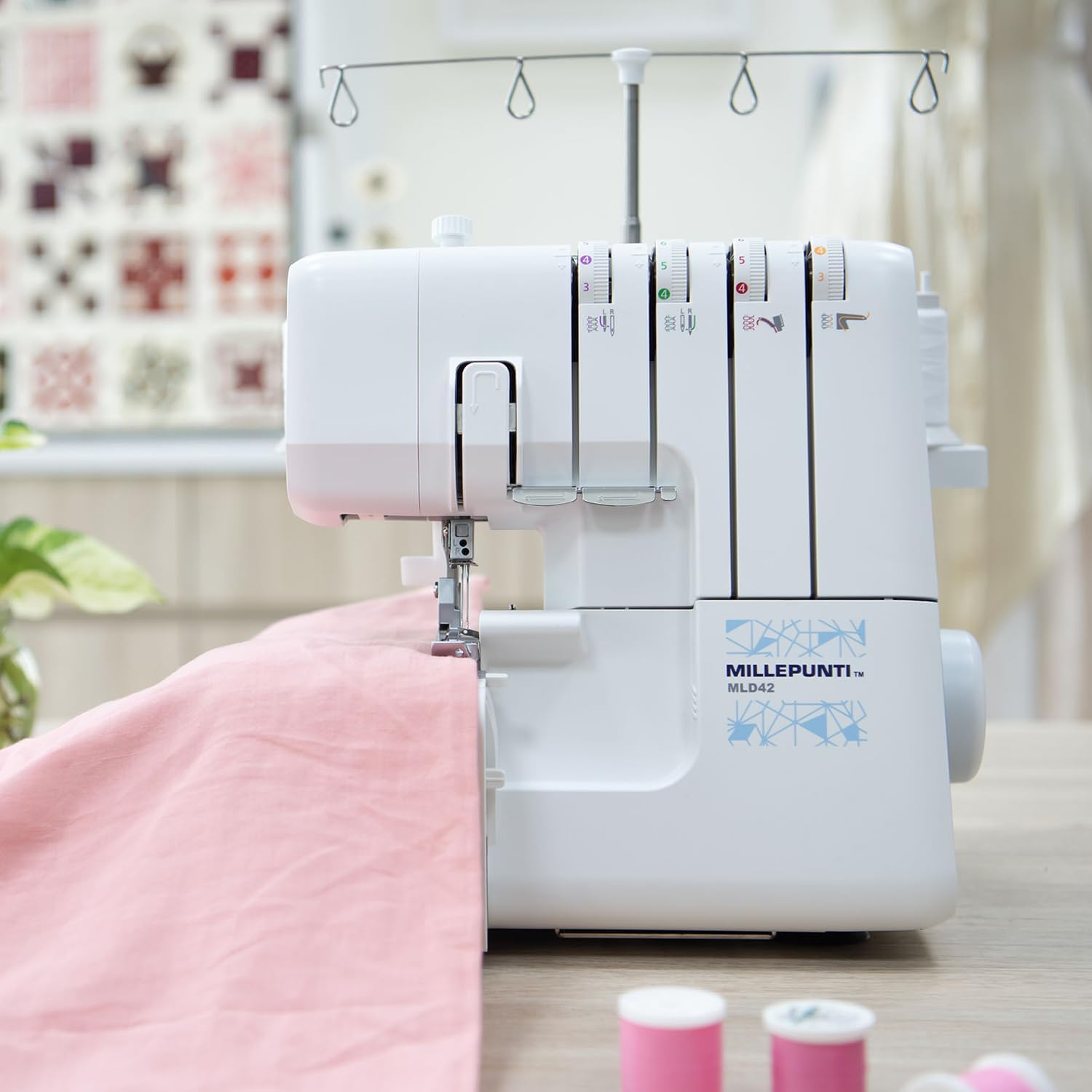
2. MILLEPUNTI MLD42 Serger — Best Metal-Frame Budget Serger for Beginners
The MILLEPUNTI MLD42 is an affordable serger designed for beginners, hobby sewists, and anyone wanting to add clean, durable seam finishing to their garments without paying for a premium model. Built with a sturdy metal frame, this serger stands out in a category where many budget machines rely heavily on plastic components.
The solid internal structure helps minimize vibration and ensures even feeding at high speeds. For new sewists, this translates into fewer skipped stitches, less fabric slippage, and smoother overlocking overall. The machine handles light- to medium-weight fabrics well—especially cotton jersey, French terry, and lightweight fleece.
Threading is supported by color-coded diagrams, making it easier than expected for a low-cost model. The differential feed is surprisingly effective at preventing puckering or stretching, ensuring professional results even on difficult fabrics.
However, this machine does not include coverstitch functionality. It’s also not ideal for heavy-duty fabrics like denim or canvas. But for the price, the MLD42 is a strong entry-level serger with above-average stability and performance.

3. Singer Professional 14T968DC — Best True Coverstitch–Serger Combo Machine
The Singer Professional 14T968DC is the star of this list because it is a true serger + coverstitch combination machine—something surprisingly rare among consumer-level models. This versatile powerhouse offers 2, 3, 4, and 5-thread overlocking alongside narrow, wide, and triple coverstitching.
Whether you’re constructing seams, finishing raw edges, or hemming knits, this machine can do it all. That means fewer machines in your sewing space and more flexibility as you switch between construction and finishing tasks.
The stitch quality is impressive in both serger and coverstitch modes. Overlock seams are tight and professional, while coverstitch hems stretch beautifully without popping. The differential feed helps prevent wavy or rippled hems on stretchy knits.
As with most combo machines, threading and mode switching require attention and practice. Beginners may need time to become comfortable moving between serger and coverstitch functions. But once mastered, the Singer 14T968DC delivers unmatched versatility, making it one of the most cost-effective combo machines available.
If you want one machine that handles both tasks, this is the best choice on your list.

4. Brother Heavy Duty Serger (1034D-HD Variant) — Best for Reliable Everyday Overlocking
This heavy-duty version of Brother’s popular serger series is an excellent option for sewists who want reliable, everyday overlocking without complexity. It is well-loved for its durability, consistent performance, and beginner-friendly threading system.
The internal metal frame provides stability during high-speed stitching, and the machine handles everyday knit and woven fabrics with ease. It produces smooth 3- and 4-thread seams ideal for casual wear, loungewear, pajamas, and children’s clothing.
The machine’s ease of use makes it a great fit for beginners learning serging for the first time. However, like most sergers, it cannot coverstitch, so you’ll need a separate hemmer for professional knit hems.
Still, as an affordable and dependable serger, it’s one of the best everyday performers.
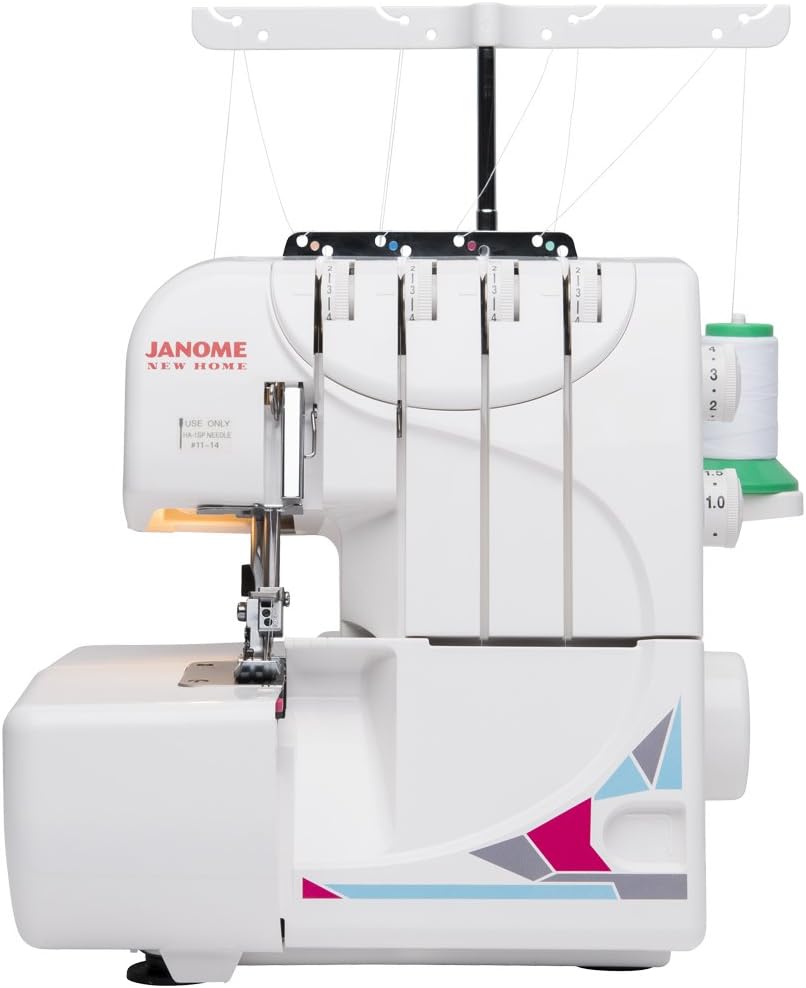
5. Janome MOD-8933 — Best Beginner-Friendly Serger With Smooth Stitching
The Janome MOD-8933 is the perfect serger for sewists who want simplicity and reliability. Known for its quiet, smooth stitching, this machine makes a great first serger for beginners or a dependable secondary machine for experienced sewists.
The differential feed and tension system are highly stable, giving consistent results on knit fabrics like rayon blends, rib knits, and cotton jersey. The MOD-8933 handles curved seams well and produces clean edges with minimal adjustment required.
Threading is easier than average thanks to Janome’s clear diagrams and open looper area. While it does not offer coverstitch functionality, the MOD-8933 is superb for seam finishing and garment construction.
If you want a stress-free, quality serger at an affordable price, this is a great pick.

6. Janome CoverPro 1000CPX — Best Standalone Coverstitch for Professional Hemming
The Janome CoverPro 1000CPX is one of the best standalone coverstitch machines for sewists who want truly professional knit hems. Its long arm, spacious sewing bed, and powerful motor make it feel like a lightweight industrial machine built for home use.
The stitches it produces are beautifully balanced, thanks to Janome’s Seam Tightening System, which reduces tunneling and ensures flat, even hems. The machine handles lightweight and stretchy fabrics exceptionally well, making it a favorite for hemming dresses, T-shirts, leggings, and activewear.
While this machine does not serge seams, its hemming quality is difficult to beat. When paired with a decent serger, the CoverPro 1000CPX creates a complete hem + overlock finishing system ideal for serious sewists and professional creators.
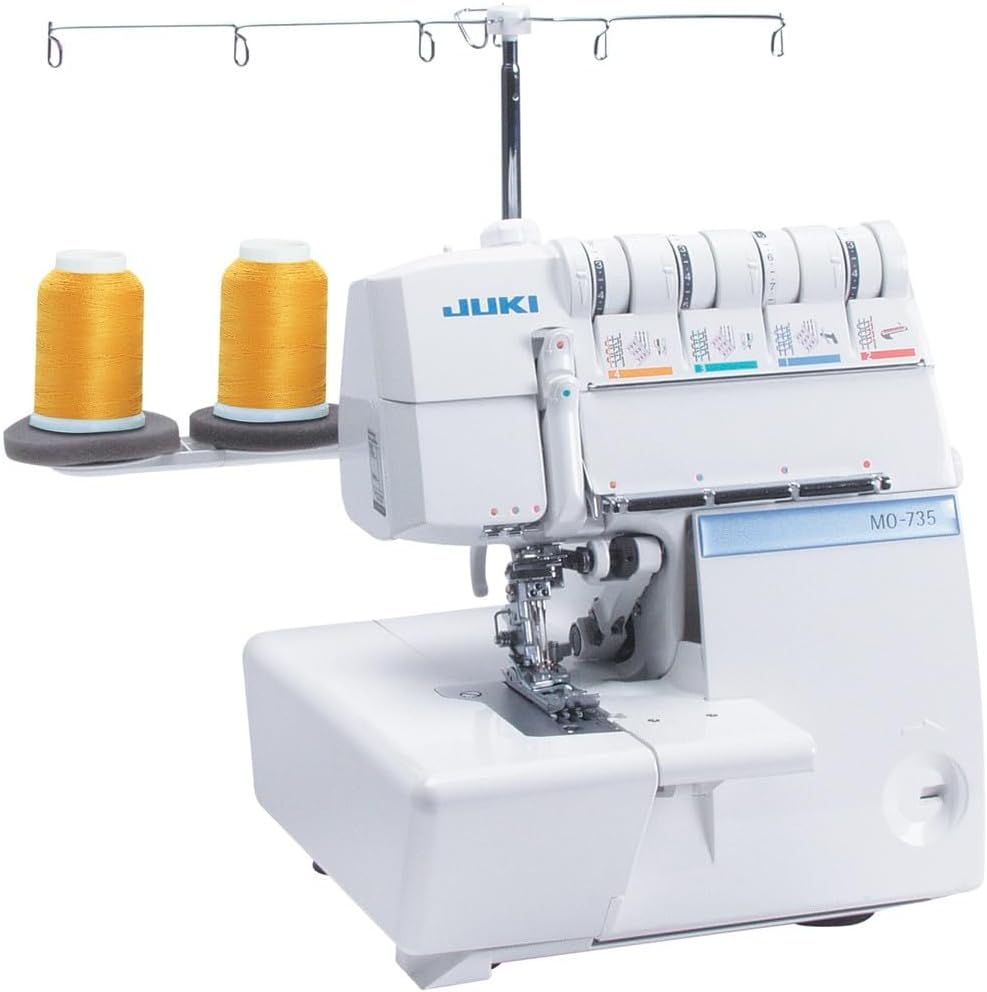
7. Juki MO-735 — Best Heavy-Duty Serger With Coverstitch Capability
The Juki MO-735 stands out as one of the most powerful combo machines available for home sewists. While its threading and mode switching are more complex, its performance rivals industrial-level equipment.
This machine can serge, overlock, coverstitch, and chainstitch, making it a true multitasker for sewists who need heavy-duty performance. It handles thick fabrics—like ponte, denim, canvas, neoprene, and multilayer knits—with ease.
Stitches are strong, balanced, and consistent. Coverstitch hems stretch beautifully without breaking, and the machine produces professional-grade seams on knits and wovens alike.
If you want industrial power in a combo machine, the Juki MO-735 is the best high-strength option on the list.
Check our full review → Juki MO-735 Serger Reviews
Comparison Table:
| Machine | Type | Best For | Skill Level |
|---|---|---|---|
| Brother 2340CV | Coverstitch | Hemming knits | All |
| MILLEPUNTI MLD42 | Serger | Budget seam finishing | Beginners |
| Singer 14T968DC | Combo | One-machine solution | Intermediate–Advanced |
| Brother HD Serger | Serger | Daily sewing | All |
| Janome MOD-8933 | Serger | Beginner-friendly | Beginners |
| Janome CoverPro 1000CPX | Coverstitch | Professional hems | Intermediate–Advanced |
| Juki MO-735 | Combo | Heavy-duty sewing | Advanced |
Buying Guide: How to Choose the Right Coverstitch or Serger Machine
Choosing the right serger or coverstitch-serger combo machine can feel overwhelming—especially when each model looks similar but performs very different jobs. The right machine can completely elevate your sewing, helping you sew faster, cleaner, and more professionally. The wrong machine, however, can slow you down, limit your creativity, or create unnecessary frustration.
Below is a complete, buying guide to help you confidently choose the perfect machine for your needs.
1. Combo Machine or Two Separate Machines?
One of the biggest decisions sewists face is whether to invest in one machine that does everything, or to buy two specialized machines that each handle a different task. There’s no “right” or “wrong” answer—just what works best for your workflow, budget, and sewing style.
When to Choose a Combo Machine
A coverstitch-serger combo machine is ideal if you want:
- One all-in-one machine
- To save space in your sewing room
- To save money by avoiding two separate purchases
- To simplify your tools while still getting professional results
Combo machines are fantastic for sewists who:
- Sew at home
- Work on a small table or corner station
- Want both hemming and seam finishing capability
- Prefer fewer machines to maintain
If you’re someone who wants the convenience of switching between hemming and serging in one body, a combo machine makes perfect sense.
When to Choose Two Separate Machines
Two separate machines—a serger and a coverstitch—are often preferred by:
- High-volume sewists
- Business owners
- Activewear makers
- Sewists who hate switching machine modes
Choosing two machines offers:
- A faster workflow (no rethreading or switching needles)
- Less downtime while changing settings
- More sewing efficiency
- Industrial-style reliability
If you sew every day, or create garments in batches, having two machines simply makes sewing smoother and more enjoyable. You can serge a seam on one machine, then immediately hem on the other—zero switching required.
2. Consider Thread Capacity
Thread capacity determines how many types of stitches your machine can create. More threads = more versatility.
2–3 Threads: Lightweight Finishing
Machines with 2–3 thread options are perfect for:
- Lightweight fabrics
- Narrow overlocks
- Decorative seams
- Delicate edges
These are great for beginners and simple garment construction.
3–4 Threads: Everyday Knitwear
The most common serger stitch is the 4-thread overlock, because it provides:
- A durable seam
- Built-in stretch
- Strong construction for T-shirts, leggings, lounge sets, etc.
Almost every garment sewist relies on 3–4 thread stitches.
5 Threads: Industrial-Quality Seams
A 5-thread safety stitch combines:
- A durable straight stitch seam, plus
- A strong overlock edge
This is commonly used in factory garment construction for jeans, uniforms, and heavy-duty clothing.
Coverstitch Needles
Coverstitch machines require 2–3 needles, not 5 threads. The extra needle gives you:
- Narrow two-line hems
- Wide two-line hems
- Triple-needle hemming (ideal for activewear)
If you want professional hems, make sure your machine supports at least two coverstitch needles.
3. Evaluate Ease of Threading
Threading is the number one complaint sewists have about sergers and coverstitch machines. That’s why choosing a model with beginner-friendly threading is so important.
Choose a machine with:
- Clear threading diagrams
- Color-coded thread paths
- Open, easy-access looper area
- Snap-on presser feet
- Automatic or adjustable tension controls
If you’re new to sergers, avoid overly complicated models. A machine that frustrates you will slow your learning process, while an easy-threading model will boost your confidence.
For beginners, threading should not feel like solving a puzzle. And if you ever plan to switch between modes frequently, simple threading becomes even more important.
4. Differential Feed Is Essential
Differential feed is what separates a good serger from a mediocre one. It controls how two sets of feed dogs move the fabric under the needle.
Differential feed prevents:
- Puckering on lightweight fabrics
- Stretching on knits
- Wavy hems on jersey
- Fabric distortion on curves
A machine without differential feed will struggle on:
- Rayon spandex
- Bamboo knits
- Rib knits
- Interlock
- Ponte
- Sweatshirt fleece
If you sew knitwear—even occasionally—differential feed is NON-negotiable.
5. Look for Features That Match Your Sewing Style
Every sewist has different needs. Here’s how to choose based on the type of sewing you do:
If You Sew Activewear:
Look for:
- A strong coverstitch
- Triple-needle capability
- Powerful differential feed
If You Sew Children’s Clothing:
Choose a serger that is:
- Reliable
- Easy to thread
- Able to handle soft, stretchy knits
If You Run a Small Sewing Business:
A combo machine is ideal if you need:
- Versatility in one machine
- Space-saving design
- Professional finishing
If You Sew Thick Fabrics:
Choose:
- A heavy-duty motor
- A machine with solid metal interior
- Strong feed dogs
FAQs
Do all sergers coverstitch?
No. Only combo machines do.
Is threading a combo machine hard?
It takes practice, but diagrams help.
Should beginners buy a combo machine first?
A serger + later coverstitch is often easier.
Is a coverstitch machine worth it?
Yes—if you sew knits.
Final Verdict
Choosing the best coverstitch–serger setup really comes down to how you sew and how much you want to invest right now.
If you want one machine that does almost everything, the ⭐ Singer Professional 14T968DC is your best overall combo. It gives you true serging and real coverstitch in a single, flexible unit—perfect for a serious home sewist or side-hustle garment maker.
If you regularly sew thick fabrics or demand industrial-level strength, the ⭐ Juki MO-735 is the heavy-duty combo to beat. It’s powerful, fast, and built for long-term use.
For those who already have (or plan to get) a serger and just want flawless hems, the ⭐ Janome CoverPro 1000CPX shines as the best standalone coverstitch—clean, flat, professional hems every time.
On a tighter budget but still want a real serger? The ⭐ MILLEPUNTI MLD42 gives you solid, metal-frame performance without a premium price tag.
And if you’re just starting your serger journey, the ⭐ Janome MOD-8933 is a kind, beginner-friendly machine that won’t overwhelm you.
Whether you sew for clients or just want your handmade clothes to look store-bought, any of these machines can dramatically upgrade your finish, confidence, and joy at the sewing table.