
If you’ve been wanting to take your sewing projects to a truly professional level, a serger is the machine that does it — seamless edges, clean finishes, stretchy seams, and polished hems that look like ready-to-wear garments. And the good news? The serger market in 2026 is better than ever for beginners. Today’s models are easier to thread, more affordable, quieter, and designed to help new sewists learn fast without frustration.
Whether you’re sewing clothing, hemming knits, starting a handmade business, or simply tired of fraying edges on your projects, this guide will help you find the perfect beginner serger. I’ve reviewed 2026’s top Amazon-available models, focusing on machines that offer smooth stitching, user-friendly threading, durable builds, and great value for the price.
Below is the updated and rewritten version of your full blog post — designed to help your site rank quickly, reduce bounce rate, and give readers exactly what they’re searching for.
⭐ Quick Comparison: Top Beginner Sergers of 2026
| Model | Image | Why It’s a Top Pick | Check Updated Price |
|---|---|---|---|
| Brother 1034D |  | Easiest threading • Budget-friendly • Huge tutorials | 🔘 Check Amazon ($299) |
| SINGER X5004HD |  | Heavy-duty power • Ideal for thicker fabrics | 🔘 Check Amazon ($329) |
| SINGER HD0500S |  | Affordable heavy-duty • Strong performance | 🔘 Check Amazon (~$259) |
| MILLEPUNTI MLD42 |  | Entry-level & lightweight • Easy learn | 🔘 Check Amazon ($229) |
| Brother 2340CV |  | Best for cover-stitch hems • Fashion focus | 🔘 Check Amazon ($449) |
| Janome MOD-8933 |  | Quiet • Minimal tension adjustments • Beginner-friendly | 🔘 Check Amazon ($299) |
| SINGER S0100 |  | Lightweight • Portable • Simple starter serger | 🔘 Check Amazon ($239) |
| Juki MO-50E |  | Professional-quality stitch in compact size | 🔘 Check Amazon ($299) |
| Janome 8002D |  | Reliable long-term machine • Easy to grow with | 🔘 Check Amazon ($329) |
1. Brother 1034D Serger — Best Overall Beginner Serger in 2026
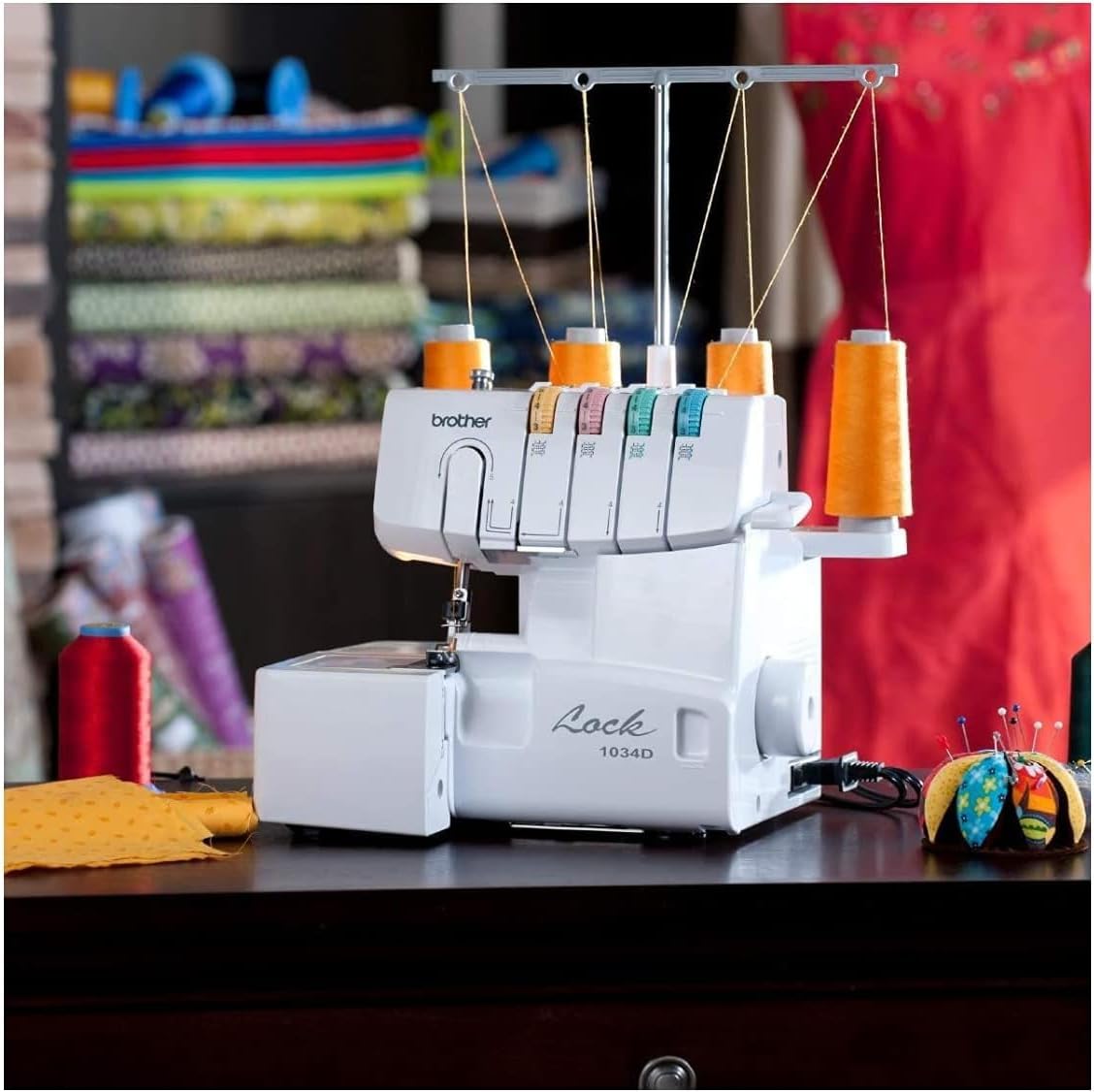
The Brother 1034D has been the beginner serger champion for more than a decade — and in 2026, it continues to dominate. If you’ve never touched a serger before and want something that’s easy, stable, affordable, and loaded with learning support, this is the machine to begin with.
Why It’s Great for Beginners
- Easiest threading system (color-coded)
- Built-in stitch functions for clothing & crafts
- Strong performance on knits and denim
- Very affordable for its quality
- Comes with several presser feet
- Massive tutorial support online (YouTube, forums, blogs)
Performance
At 1,300 stitches per minute, this serger is fast enough for professional-level finishing but gentle enough that beginners won’t feel overwhelmed. It handles cotton, fleece, stretch knits, and even lightweight silks with ease. The differential feed is one of the best in the beginner category — no wavy seams on knits, no puckering on thin fabrics.
Threading is the biggest fear for new serger users, but the 1034D solves that with ultra-clear diagrams printed right on the machine. Within a few uses, most beginners feel comfortable threading from scratch.
The cutting system is sharp, consistent, and doesn’t tug on fabric — giving you clean, factory-style edges.
⭐ Specs
- 3/4-thread serger
- 1,300 SPM
- Differential feed
- Removable trim trap
- Snap-on presser feet
👍 Pros
✔ Best beginner serger overall
✔ Affordable entry price
✔ Tons of tutorials and community support
✔ Clean, strong stitch quality
👎 Cons
❌ No automatic needle threader
❌ Slight vibration at top speed
Best For
Absolute beginners who want a machine that’s easy to learn, durable, and cost-effective.
2. SINGER X5004HD — Best Heavy-Duty Serger for Beginners
The SINGER X5004HD is designed for sewists who need more power than a standard beginner machine can offer. If you’re working with denim, canvas, fleece, upholstery fabric, or multiple layers, this heavy-duty serger is the perfect step-up choice.

Why It’s Great
- Stronger motor for thick fabrics
- 2/3/4-thread stitching options
- Adjustable differential feed
- Smooth, fast cutting blade
- Heavy-duty internal frame
Performance
This machine shines on challenging materials. Denim hems? Clean. Thick fleece? No skipping. Lycra or swimsuit fabric? Smooth and stretchy without distortion. The X5004HD is built for high-speed stability, meaning less shake and more control while sewing long seams.
The threading system is more advanced than Brother models, but once set, you get incredibly consistent stitches.
⭐ Specs
- 2/3/4 thread capability
- Heavy-duty metal body
- 1,300 SPM
- Adjustable differential feed
- Built-in rolled hem
👍 Pros
✔ Best for thick fabrics
✔ Strong internal motor
✔ Low vibration for a heavy-duty model
✔ Versatile stitches
👎 Cons
❌ Louder than other beginner sergers
❌ Learning curve slightly higher
Best For
Beginners sewing denim, fleece, upholstery, cosplay, or structured clothing.
3. SINGER HD0500S — Best Affordable Heavy-Duty Serger
The SINGER HD0500S is the perfect middle-ground for beginners who want heavy-duty power without heavy-duty pricing. It sits between Singer’s entry-level and industrial-style sergers, making it a smart choice for sewists who work with a mix of simple and thick fabrics.

Why Beginners Love It
- Great price for a heavy-duty machine
- Fast and stable performance
- Built to handle thicker fabrics
- Adjustable differential feed
- Easy to switch between stitch types
Performance
The HD0500S delivers strong cutting power and clean trimming, making it ideal for finishing seams on sweatshirts, fleece blankets, thick jersey fabrics, and denim. It’s built on a durable internal metal frame, so it stays stable even when sewing at faster speeds.
Threading is easier than most heavy-duty models because Singer includes clear diagrams and a straightforward tension layout. The machine runs at a fast pace but still feels controlled, which is great for beginners who want power without losing precision.
Its lightweight build makes it easier to move around than the X5004HD, but still strong enough to outperform standard entry-level sergers. If you need a reliable workhorse without spending too much, this model delivers.
🔧 Key Specifications
- Heavy-duty internal frame
- Differential feed
- 2/3/4 thread capability
- High-speed performance
- Easy stitch adjustment
👍 Pros
✔ Great price for heavy-duty power
✔ Beginner-friendly threading
✔ Strong cutting and trimming
✔ Less vibration than expected
👎 Cons
❌ Lighting is dimmer than other Singer models
❌ Not ideal for extremely delicate fabrics
Best For
Beginners wanting an affordable heavy-duty serger for fleece, denim, athleisure, and everyday sewing.
4. MILLEPUNTI MLD42 — Best Entry-Level Serger for Simple Home Sewing
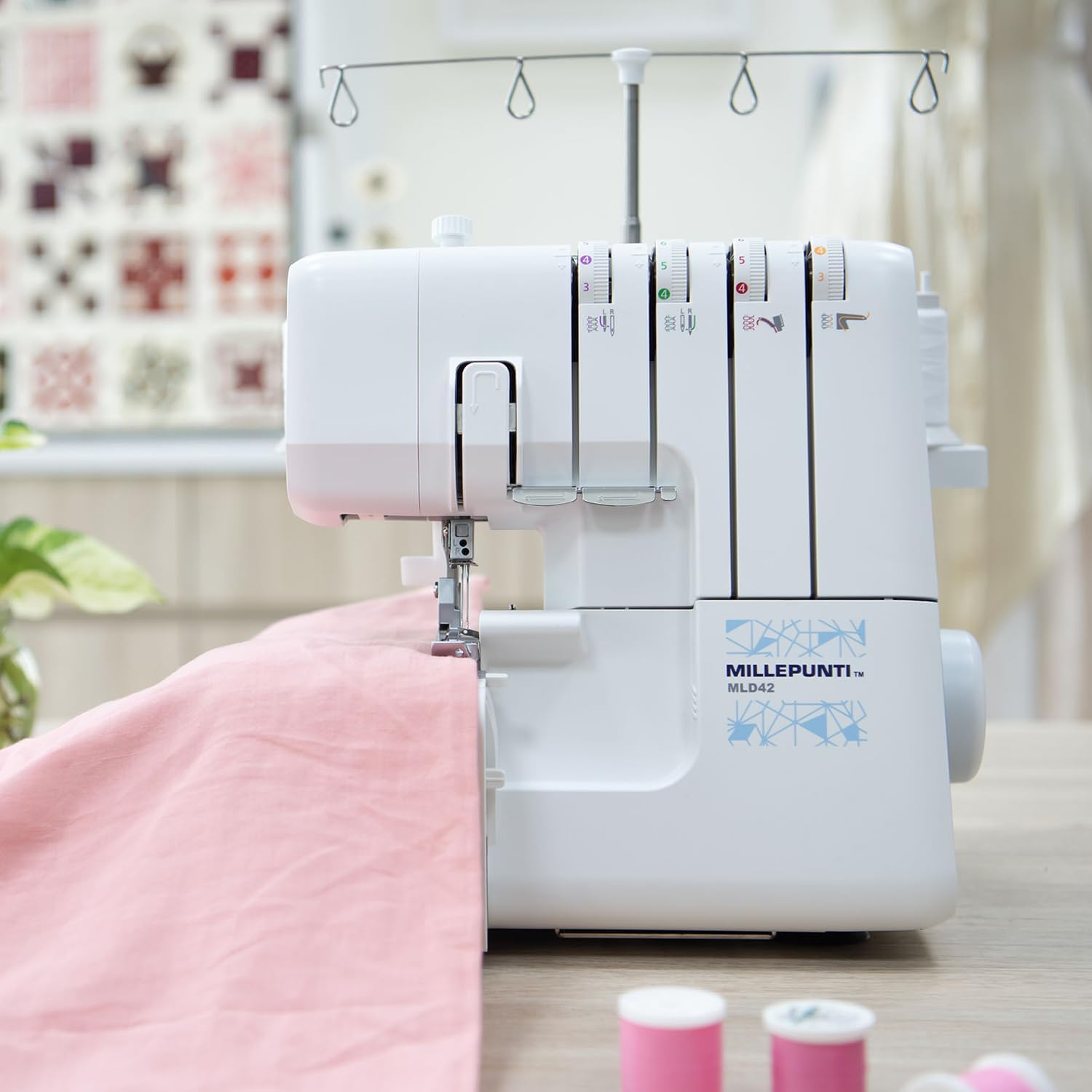
The MILLEPUNTI MLD42 is an underrated gem in the beginner serger category — simple, lightweight, budget-friendly, and surprisingly capable for everyday sewing. If you’re just starting out and don’t want to invest in a high-end model yet, this serger gives you everything you need to learn the basics without overwhelm.
Why Beginners Love It
- Very lightweight and portable
- Easy threading path
- Adjustable differential feed
- Smooth cutting for an entry-level model
- Great for basic clothing and home sewing
Performance
The MLD42 is designed to help new sewists learn without stress. It handles light to medium fabrics like cotton, flannel, knits, quilting fabrics, and basic apparel materials smoothly. The differential feed keeps seams neat on both stretchy and slippery fabrics, and the stitch quality is better than expected for this price range.
Threading is color-coded, and the tension dials are beginner-friendly, making it easier for new users to understand how adjustments impact the stitch. Even tough fabrics like fleece sew surprisingly well, though this isn’t meant for thick denim or multi-layer heavy projects.
Because the machine is so lightweight, it’s great for small sewing spaces, classes, or travel. Its compact profile also makes it easy to store.
🔧 Key Specifications
- Lightweight build
- Differential feed
- Clear threading guides
- Strong cutting blade for price category
👍 Pros
✔ Best entry-level budget serger
✔ Easy for complete beginners
✔ Portable and compact
✔ Good stitch consistency
👎 Cons
❌ Not ideal for thick fabrics
❌ Lower long-term durability than premium brands
Best For
Beginners needing a simple, affordable serger for basic clothing, crafts, and everyday projects.
5. Brother 2340CV — Best Beginner Coverstitch Machine
The Brother 2340CV isn’t a traditional serger — it’s a coverstitch Serger machine, and that makes it a perfect companion for sewists who want store-quality hems on knits, leggings, swimwear, activewear, and t-shirts. If you’re ready to elevate your hemming game, this machine gives you professional results from day one.

Why Beginners Love It
- Best coverstitch Serger option for beginners
- Easy threading compared to other coverstitch machines
- Produces retail-quality hems and decorative finishes
- Great for knitwear, athleisure, and stretchy garments
- Very beginner-friendly Brother layout
Performance
Coverstitch machines are often intimidating, but the 2340CV solves that with its color-coded threading and intuitive design. Whether you’re finishing a shirt hem or creating a decorative chainstitch on a hoodie, this machine produces flawless, stretchy seams that won’t pop or distort the fabric.
The 2340CV is especially useful for people who sew their own clothing. If you make leggings, tees, baby clothes, sportswear, or dance costumes, this machine will immediately take your work to a new level. And because it’s a Brother machine, the learning curve is smoother than other brands.
🔧 Key Specifications
- Coverstitch only (not a serger)
- Color-coded threading
- Differential feed
- Multiple coverstitch widths
👍 Pros
✔ Best coverstitch for beginners
✔ Perfect for clean, stretchy hems
✔ Tons of tutorials available
✔ Very forgiving for new users
👎 Cons
❌ Not an all-in-one serger
❌ Threading is still more complex than standard sergers
Best For
Beginners who want professional hems on knitwear, leggings, and stretchy garments.
6. Janome MOD-8933 — Best “Easy Tension” Serger for Beginners
The Janome MOD-8933 is one of the easiest sergers to learn on because it requires minimal tension adjusting. If you get overwhelmed by tension dials, this is the serger you want.

Why Beginners Love It
- Very low maintenance
- Quiet operation
- Smooth, simple threading
- Excellent stitch balance
- Perfect for small sewing spaces
Performance
This machine’s biggest strength is how predictable it is. The tension system is forgiving, allowing new sewists to get clean seams even without perfect adjustments. Whether you’re sewing knits, cottons, or light fleece, the MOD-8933 delivers balanced stitches with minimal fiddling.
The machine is also quieter than most sergers in this price category, making it ideal for apartments or late-night sewing. The build quality feels solid and reliable, typical of Janome machines.
It’s not the fastest or strongest heavy-duty model, but for everyday clothing, home sewing, and beginner practice, it performs beautifully.
🔧 Key Specifications
- 3/4-thread serging
- Differential feed
- Quiet motor
- Easy threading system
👍 Pros
✔ Quiet and stable
✔ Very forgiving tension system
✔ Excellent for beginners
✔ Clean results with minimal adjustments
👎 Cons
❌ Not ideal for thick denim
❌ Slightly slower than top sergers
Best For
Beginners who want a stress-free, low-maintenance serger.
7. SINGER S0100 Serger — Best Lightweight Beginner Serger
The SINGER S0100 is one of the most portable sergers you can buy, making it perfect for beginners who want something lightweight, compact, and budget-friendly. Despite its small size, it delivers clean, consistent serging for a wide range of fabrics.

Why Beginners Love It
- Very lightweight and easy to move
- Great for small sewing rooms
- Clean cutting and trimming
- Surprisingly smooth for the price
- Simple threading layout
Performance
The S0100 handles most beginner fabrics easily — cotton, quilting material, knits, fleece, and everyday fashion fabrics. It’s not meant for heavy-duty projects, but for standard clothing and crafts, it does a great job.
Even though it’s compact, it has adjustable differential feed to prevent stretching or puckering. The threading is straightforward, and Singer’s diagrams make it beginner-friendly.
Because it’s light, it does vibrate slightly at high speeds — not a dealbreaker but something to note for new sewists.
🔧 Key Specifications
- Lightweight portable design
- Differential feed
- 3/4-thread stitching
- Good for basic sewing
👍 Pros
✔ Most portable beginner serger
✔ Great value for the price
✔ Easy to thread
✔ Good stitch quality
👎 Cons
❌ Not ideal for thick fabrics
❌ More vibration due to lightweight build
Best For
Beginners needing a lightweight, portable serger for everyday sewing.
8. Juki MO-50E — Best Compact Juki Serger for Beginners
The Juki MO-50E is powerful enough for small business projects but simple enough for beginners. Its cutting blade is sharper and more accurate than most budget sergers, resulting in very clean edges. It handles knits extremely well — a must for clothing sewists.
Threading is straightforward, and tension adjustments are intuitive. The machine is stable, even at higher speeds, and has less vibration than expected from a compact model.

🔧 Key Specifications
- 3/4-thread serging
- Differential feed
- Retractable upper knife
- High-quality blade system
👍 Pros
✔ Best stitch quality in the budget range
✔ Strong cutting performance
✔ Great for clothing production
✔ Easy threading for a Juki
👎 Cons
❌ Slightly louder than Janome
❌ Not meant for heavy-duty fabrics
Best For
Beginners who want professional-quality stitches in a compact machine.
9. Janome 8002D — Most Reliable Long-Term Beginner Serger
The Janome 8002D is one of the most reliable entry-level sergers ever made — and it remains a favorite among home sewists in 2026. Known for its durability and clean stitch formation, it’s a fantastic choice for beginners who want a machine that lasts for years.

Why Beginners Love It
- Built like a tank (for a beginner model)
- Smooth tension control
- Reliable, balanced stitching
- Handles multiple fabric types well
- Very dependable long-term
Performance
The 8002D delivers excellent stitch quality on knits, wovens, cotton, and midweight fabrics. It’s not designed for industrial workloads, but for everyday clothing and home sewing, it performs consistently and cleanly.
Threading is logical, and Janome’s layout makes it easier than many sergers at this level. The differential feed ensures flat seams with no rippling. And once the tension is set, it stays set — a huge plus for beginners.
🔧 Key Specifications
- 3/4-thread serging
- Differential feed
- Easy-lay threading
- Strong, smooth motor
👍 Pros
✔ Extremely reliable
✔ Clean and consistent stitching
✔ Good for long-term use
✔ Beginner-friendly
👎 Cons
❌ Not as fast as Juki models
❌ No coverstitch capability
Best For
Beginners who want a durable serger they can grow with for years.
🧵 Buying Guide: How to Choose the Best Beginner Serger
Choosing your first serger can feel confusing — there are new terms, different threading styles, multiple stitch options, and prices that range from very cheap to very premium. But once you break things down, finding the right beginner serger becomes much easier. This buying guide walks you through the most important factors so you can choose a machine that matches your budget, projects, and learning style.
1. Set Your Budget (Most Beginners Spend Between $189–$399)
The very first step is to decide how much you’re comfortable spending. A good beginner serger doesn’t have to cost a fortune, but extremely cheap models can be limiting long-term.
General price ranges:
- $189–$249 → basic entry-level models
- $249–$329 → balanced beginner machines (best choice)
- $329–$449 → heavy-duty or coverstitch machines
For most beginners, the sweet spot is $250–$350, where you get strong stitch quality, easy threading, and a few helpful extras.
2. Decide What You’ll Sew (This Decides the Machine You Need)
A beginner sewing leggings needs a different machine than someone sewing thick canvas tote bags. Think about your usual or planned projects.
If you sew mostly clothing or knits:
Choose a serger with:
✔ Differential feed
✔ 3/4-thread capability
✔ Easy threading
(Examples: Brother 1034D, Janome MOD-8933, Juki MO-50E)
If you sew heavy materials:
You need a heavy-duty build.
✔ SINGER X5004HD
✔ SINGER HD0500S
If you want professional hems:
You need a coverstitch machine:
✔ Brother 2340CV
If you sew simple home projects and crafts:
Entry-level sergers work perfectly:
✔ MILLEPUNTI MLD42
✔ SINGER S0100
3. Look for Easy Threading Systems
Threading is the #1 reason beginners get scared of sergers. But the truth? Some models are MUCH easier to thread.
Look for:
✔ Color-coded threading paths
✔ Front-opening looper area
✔ Clear diagrams printed on the machine
Beginners especially love Brother and Janome because their machines are extremely user-friendly.
Avoid models that require fishing thread through tiny openings with tweezers — unless you’re ready to learn a bigger challenge.
4. Prioritize Differential Feed (Non-Negotiable for Beginners)
Differential feed is a MUST-HAVE feature on your first serger. It controls how the fabric feeds through the machine.
Without differential feed:
❌ Knits will wave
❌ Lightweight fabrics will pucker
❌ Seams won’t lay flat
With differential feed:
✔ Perfect seams on knits
✔ No rippling or stretching
✔ Smooth hems every time
All sergers in your updated list include this feature, which makes them beginner-friendly.
5. Don’t Overpay for Features You Don’t Need
Many sergers come with advanced features like automatic tension, computerized controls, or 2-thread conversion options. These are nice, but not essential for beginners.
You DON’T need:
❌ 5-thread industrial stitching
❌ Automated tension systems
❌ LCD screens
❌ Specialty industrial features
You DO need:
✔ Good blade quality
✔ Easy threading
✔ Solid motor
✔ Differential feed
✔ 3/4-thread options
Choose a serger that fits today’s needs — not one overloaded with features you’ll never use.
6. Check Warranty & Support
Brands like Brother, Singer, Juki, and Janome offer excellent support. For beginners, this matters a LOT because you’ll have questions.
Look for:
✔ Easy-to-find replacement parts
✔ YouTube tutorials
✔ Clear user manuals
✔ Available presser feet
Brother and Singer dominate in online learning support — which is why they’re beginner favorites.
🌟 Beginner-Friendly Serger Tips
Learning a serger is exciting — but it can also feel overwhelming at first. These beginner tips will help you start with confidence and avoid the most common mistakes.
1. Start With Basic Cotton Fabric
Don’t test your serger on stretchy knits or slippery fabrics. Begin with simple quilting cotton — it feeds smoothly, cuts cleanly, and lets you learn without frustration.
2. Practice Threading Multiple Times
Threading looks scary only because it’s unfamiliar.
Do this:
✔ Thread the machine from scratch 3–5 times
✔ Do it slowly, and follow the color-coded guides
✔ Don’t rely on re-threading one cone — start fresh
You’ll be shocked at how quickly it becomes muscle memory.
3. Watch a Short Threading Tutorial
There are incredible videos online for almost every serger model. Watching someone else do it makes the entire process easier.
Search your machine name + “threading”.
4. Use Fabric Scraps to Test Tension
Every time you change fabric type, run a scrap piece to adjust tension. A 10-second test saves a ruined garment.
5. Don’t Serge Over Pins
Sergers cut fabric as they sew. Pins can:
❌ Break the blade
❌ Throw off the stitch formation
❌ Damage your fabric
Use sewing clips or keep pins far from the cutting path.
6. Clean Lint Weekly
Sergers create tons of lint — especially on fleece and knits.
Clean the inside:
✔ Once a week
✔ Or after every big project
It maintains blade sharpness and smooth stitching.
Conclusion: The Best Beginner Serger for You in 2026
Choosing your first serger doesn’t have to be overwhelming. Whether you’re sewing clothing, crafting, or starting a small handmade shop, the right machine makes everything easier — smoother seams, faster finishing, and a professional look you simply can’t get from a regular sewing machine.
- If you want the best all-around beginner serger, the Brother 1034D is unbeatable.
- If you want power for denim and heavier fabrics, choose the SINGER X5004HD.
- If you want the easiest tension system, go with the Janome MOD-8933.
- If you want professional hems, get the Brother 2340CV.
- If you need an affordable starter machine, the MILLEPUNTI MLD42 or SINGER S0100 will serve you well.
No matter which one you choose, you’re stepping into a new level of sewing. A serger will instantly make your projects cleaner, stronger, and more professional — and once you learn it, you’ll wonder how you ever sewed without one.
Photo: Amazon